If your child’s glasses prescription keeps getting stronger, you may be wondering whether anything can be done to slow it down.
At Farmilo Optometrist, we offer specialist childhood myopia management, combining evidence-based treatments with advanced eye-growth monitoring using our Topcon MYAH.
Our aim is simple: to help your child see clearly today while taking steps to slow the progression of their short-sightedness.
Myopia, commonly known as short-sightedness, causes distant objects to appear blurred. It often develops during childhood and can progress as children grow.
Although glasses and contact lenses can correct blurred vision, conventional lenses do not usually slow the underlying progression of myopia. Higher levels of myopia are associated with an increased lifetime risk of conditions including retinal detachment, glaucoma and myopic maculopathy.
Fortunately, specialist myopia management treatments can slow progression in many children. Starting appropriate treatment while a child is still growing may help reduce the amount of myopia they develop.
Managing myopia involves more than simply prescribing stronger glasses every year. At Farmilo, we combine comprehensive eye examinations, specialist myopia management treatments and regular measurements of your child’s eye growth. This allows us to monitor their progression and review their treatment as their eyes develop.
One of the most important measurements in childhood myopia management is axial length — the physical length of the eye from front to back.
As myopia progresses, the eye typically grows longer. Monitoring this growth provides valuable information that a glasses prescription alone cannot tell us.
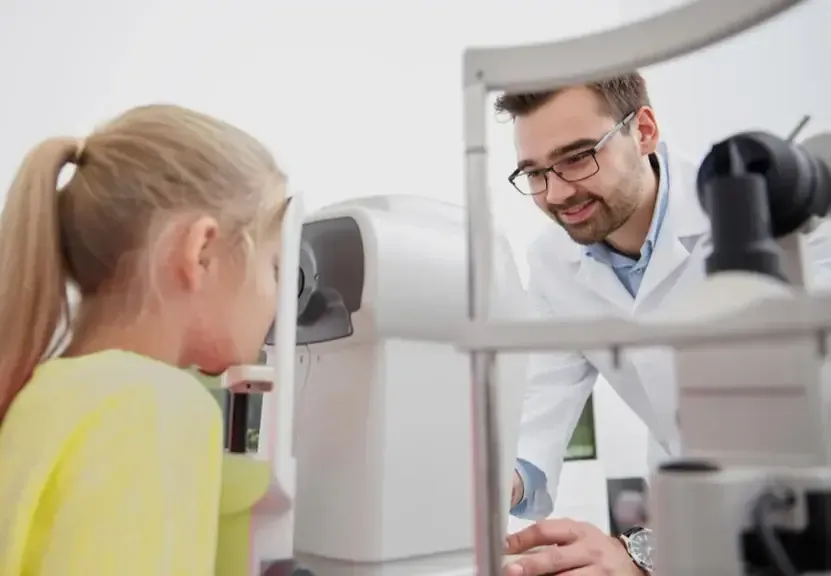
Our Topcon MYAH allows us to measure axial length accurately and without touching your child’s eye. By repeating these measurements at appropriate intervals, we can:
We interpret these measurements alongside prescription changes and other clinical findings to build a more complete picture of your child’s eye development.
Every child is different. Their age, prescription, lifestyle and personal preferences all influence which treatment may be most suitable.
We offer a range of specialist myopia management options supported by published clinical research. We’ll explain their benefits, limitations and suitability before agreeing on a treatment plan with you and your child.
Specially designed spectacle lenses that correct your child’s short-sightedness while using innovative lenslet technology to help slow myopia progression. They look similar to conventional glasses and can be an excellent option for children who prefer spectacles.
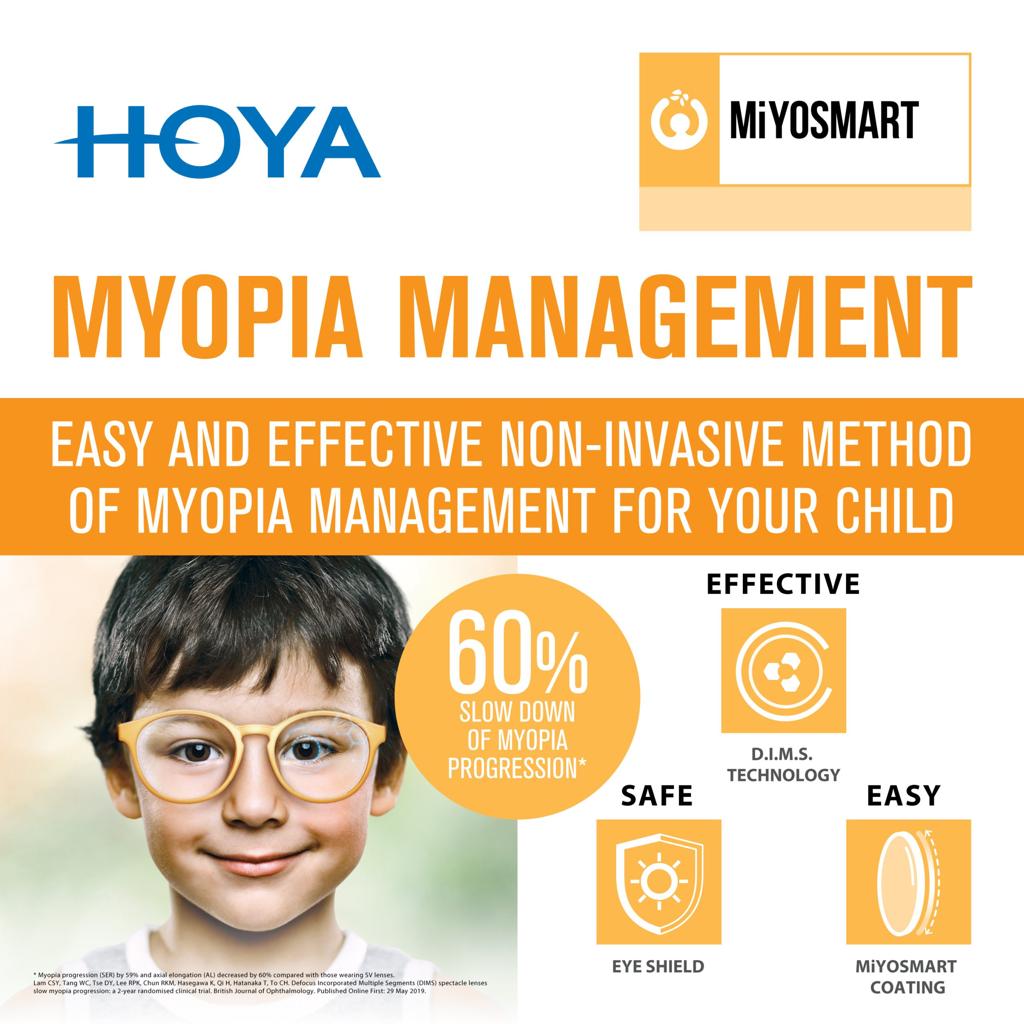
MiYOSMART lenses use Defocus Incorporated Multiple Segments (DIMS) technology to correct short-sightedness and help slow its progression. They provide another spectacle-based option for children who would prefer not to wear contact lenses.
DOT lenses use Diffusion Optics Technology to manage retinal contrast while correcting your child’s vision. They offer a different approach to spectacle-based myopia management.
Orthokeratology uses specially designed rigid contact lenses worn overnight to temporarily reshape the cornea.
This allows many children to see clearly during the day without needing glasses or contact lenses. Ortho-K can also slow myopia progression.
Because the lenses are worn during sleep, careful hygiene, regular follow-up and an understanding of the risks of overnight contact lens wear are particularly important.
MiSight 1 day soft contact lenses are designed to correct short-sightedness while helping to slow myopia progression. They may suit children who enjoy sport, prefer not to wear glasses or are comfortable handling contact lenses.
Treatment availability and suitability are confirmed during your child’s assessment. Contact lenses carry a risk of infection and require appropriate care.
Starting myopia control is only the beginning. We also need to understand how your child’s eyes respond as they grow. With regular Topcon MYAH measurements, prescription assessments and eye examinations, we can track progression over time.
If their myopia continues to progress more quickly than expected, we can review their treatment and discuss whether a different approach would be appropriate.
No treatment can guarantee that myopia will stop progressing, but regular monitoring helps us make informed decisions about your child’s ongoing care.
Our myopia assessment is particularly relevant for:
A non-invasive light-based treatment for suitable patients with dry age-related macular degeneration
If your child’s short-sightedness is increasing, an early assessment can help us understand their progression and discuss suitable management options.
At Farmilo Optometrist, we’ll examine your child’s eyes, measure their axial length using our Topcon MYAH and explain the next steps.
Book a Myopia Assessment