
When ordinary glasses are no longer enough, it doesn’t mean you have to give up reading, hobbies or the everyday tasks that matter to you.
For people living with reduced vision, the right low-vision aid can make an enormous practical difference.
At Farmilo Optometrist, our Low Vision service is designed around one simple principle:
We can assess what you’re struggling with, understand what you’d like to be able to do and demonstrate different magnification solutions until we find the ones that work best for you.
And if getting to the practice is difficult, we can come to your home.
Don't choose a magnifier from a catalogue. Try it properly first.
Low vision describes reduced vision that cannot be fully corrected with conventional spectacles or contact lenses and which affects everyday activities.
It can occur as a result of eye conditions including:
The effect is different for everybody. One person may struggle to read letters and bills. Another may be able to read but have difficulty seeing photographs, medication labels or food packaging. Someone else may simply want to continue sewing, painting, model-making or another hobby.
That’s why low-vision care shouldn’t begin with the magnifier.
It should begin with the person using it.
Sometimes increasing a spectacle prescription alone isn’t enough to provide the vision required for a particular task. That’s where low-vision aids can help. Traditional optical magnifiers can provide additional magnification, while modern electronic video magnifiers work differently.
They use a camera and digital display to enlarge text and images. Depending on the device, you may also be able to adjust:
Some advanced devices can even recognise printed text and read it aloud. But more features don’t automatically make a device better. The right magnifier is the one that helps you do what you want to do.
This is one of the most important questions we ask. Do you want to:
A device that’s excellent for reading a novel at home might be completely impractical in a supermarket.
A small handheld magnifier that’s ideal for checking a price tag may not be comfortable for reading a newspaper for half an hour.
Your assessment allows us to match the magnification to the task, rather than simply selling you a device.
Buying a magnifier online can be difficult.
Specifications such as 5×, 10× or 15× magnification don’t necessarily tell you how comfortable or useful a device will actually be.
Screen size matters. Working distance matters. Contrast matters. How you hold the device matters. And most importantly, your remaining vision matters. That’s why we believe trying different magnifiers yourself is so important.
You can see the difference rather than trying to imagine it from a brochure or website.
You can visit us at Farmilo Optometrist for your Low Vision Assessment. We’ll discuss the situations in which you’re struggling and allow you to try appropriate low-vision aids using real reading material.
You can compare different levels of magnification and different types of equipment before deciding what feels most comfortable. There is no substitute for actually trying the device yourself.
We also understand that the people who most need low-vision services can sometimes be the people who find it hardest to travel.
That’s why we can also offer home Low Vision Assessments. We’ll bring a selection of suitable magnification options to you so you can try them in your own environment. There are some real advantages to doing this at home. You can try a magnifier:
Rather than asking whether a magnifier works in theory, we can see whether it works in your real life.
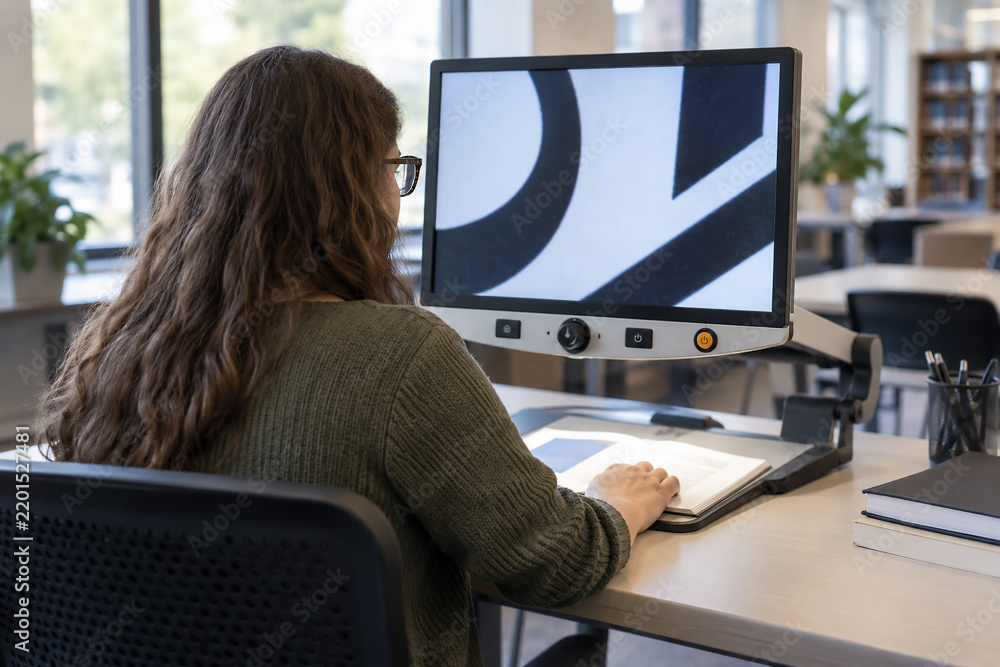
Electronic magnifiers have transformed what’s possible for many people with reduced vision.
Instead of looking through a traditional magnifying lens, a camera captures the material in front of you and displays an enlarged version on a screen.
You can then change the magnification according to the task.
Many devices also allow you to alter contrast or reverse colours — for example, displaying white text on a black background rather than conventional black text on white.
For some people, this can make prolonged reading considerably more comfortable.
Handheld video magnifiers are designed for portability. They can be useful for tasks such as:
They’re particularly useful for people who want magnification they can easily carry with them.

If you want to spend longer periods reading at home, a larger desktop magnifier may be more appropriate. These systems provide a much larger screen and can be easier to use for extended tasks such as:
The larger image and more stable viewing position can make them considerably more comfortable for prolonged use.

Some electronic magnifiers go beyond simply enlarging text. They can capture printed material, recognise the words and read them aloud using text-to-speech technology. For someone who finds prolonged visual reading tiring, this can be particularly useful.
You might visually magnify a short piece of text but ask the device to read a longer document aloud. Technology can therefore supplement your remaining vision rather than relying entirely on magnification.
We demonstrate low-vision products from Eschenbach, a specialist manufacturer with a long history in optical and electronic magnification. Depending on your needs, options can include:
Portable electronic magnifiers designed for everyday reading tasks at home or while you’re out.
Larger electronic systems designed for more comfortable extended reading and detailed visual tasks.
Traditional optical magnifiers with integrated illumination can still be extremely effective for many tasks.
For hobbies and close work, a hands-free or supported magnifier can sometimes be more practical than holding a device. The most technologically advanced option isn’t necessarily the right one. Sometimes a well-chosen illuminated optical magnifier is exactly what’s needed.
We also demonstrate equipment from HumanWare, a specialist in assistive technology for people with visual impairment. Its electronic magnification ranges include portable and desktop solutions.
The explorē range provides portable electronic magnification for everyday tasks.
Depending on the model, features can include variable magnification and different display modes to help make text and objects easier to see.
They’re designed to provide magnification that can travel with you.
Prodigi systems combine electronic magnification with additional accessibility features.
Depending on the system, this can include the ability to enlarge documents and use text recognition and speech to have printed material read aloud.
This can be particularly useful when conventional visual magnification alone becomes tiring.
Some modern systems combine the functions of a magnifier with features normally associated with a tablet or digital device. For the right person, this can reduce the need for several separate pieces of equipment.
For somebody who wants something very simple, however, those additional features may be unnecessary. We’ll help you decide.
Electronic technology is impressive, but it isn’t automatically right for everyone. We can also consider more traditional solutions such as:
Sometimes the simplest solution is the best one. Our role is to help find it.

Age-related macular degeneration is one of the conditions commonly associated with difficulties with detailed central vision.
If AMD has made reading or other close tasks difficult, simply making the spectacle prescription stronger may not provide enough improvement.
Magnification can make the object or text larger so that you can make better use of the vision you still have.
For someone with AMD, that might mean being able to read a letter, see a photograph, continue a hobby or independently check everyday information again.
Low-vision care isn’t about promising to restore lost vision.
It's about helping you use your remaining vision as effectively as possible.
A Low Vision Assessment may be helpful for:
Low vision doesn’t only affect the person experiencing sight loss. Family members often help with reading post, medication, shopping, appointments and other everyday tasks. You’re welcome to bring somebody with you to your assessment.
For home visits, family members can also be present while we demonstrate the equipment. This can make it easier for everybody to understand how the device works and how it could help.
We don’t believe the goal should be to sell you the biggest or most expensive electronic magnifier. The goal is to find the device that you will actually use. We’ll consider:
Then you can actually try the options.
The best magnifier isn’t the one with the longest specification list. It’s the one that helps you do what matters to you.
A magnifier doesn’t treat the underlying eye condition or restore vision that has been permanently lost. Instead, magnification makes text and objects larger so you can make better use of your remaining vision.
Not necessarily. Electronic magnifiers can provide greater flexibility, variable magnification and different contrast settings. But for some tasks, a simple optical magnifier may be easier and more convenient. We’ll help you compare them.
Yes. That’s an important part of our service.
Where suitable equipment is available for demonstration, we want you to experience how it works before deciding whether it’s right for you.
Yes. We can provide Low Vision Assessments at home for people who would prefer to be assessed in their own environment. This also gives you the opportunity to try appropriate equipment with your own reading material, lighting and everyday tasks.
Absolutely. Family members or carers are welcome to be involved in the assessment and demonstration.
We can demonstrate and supply appropriate low-vision equipment from specialist manufacturers including Eschenbach and HumanWare. We’ll discuss which products are suitable based on your individual requirements.
If ordinary glasses are no longer giving you enough vision for reading, hobbies or everyday tasks, there may still be ways we can help.
At Farmilo Optometrist, our Low Vision service allows you to try different magnification solutions before deciding what works for you. Visit us in-store, or let us bring suitable options to your home.
We’ll start with what you want to be able to do — and work backwards from there.

Helping You Make More of the Vision You Have
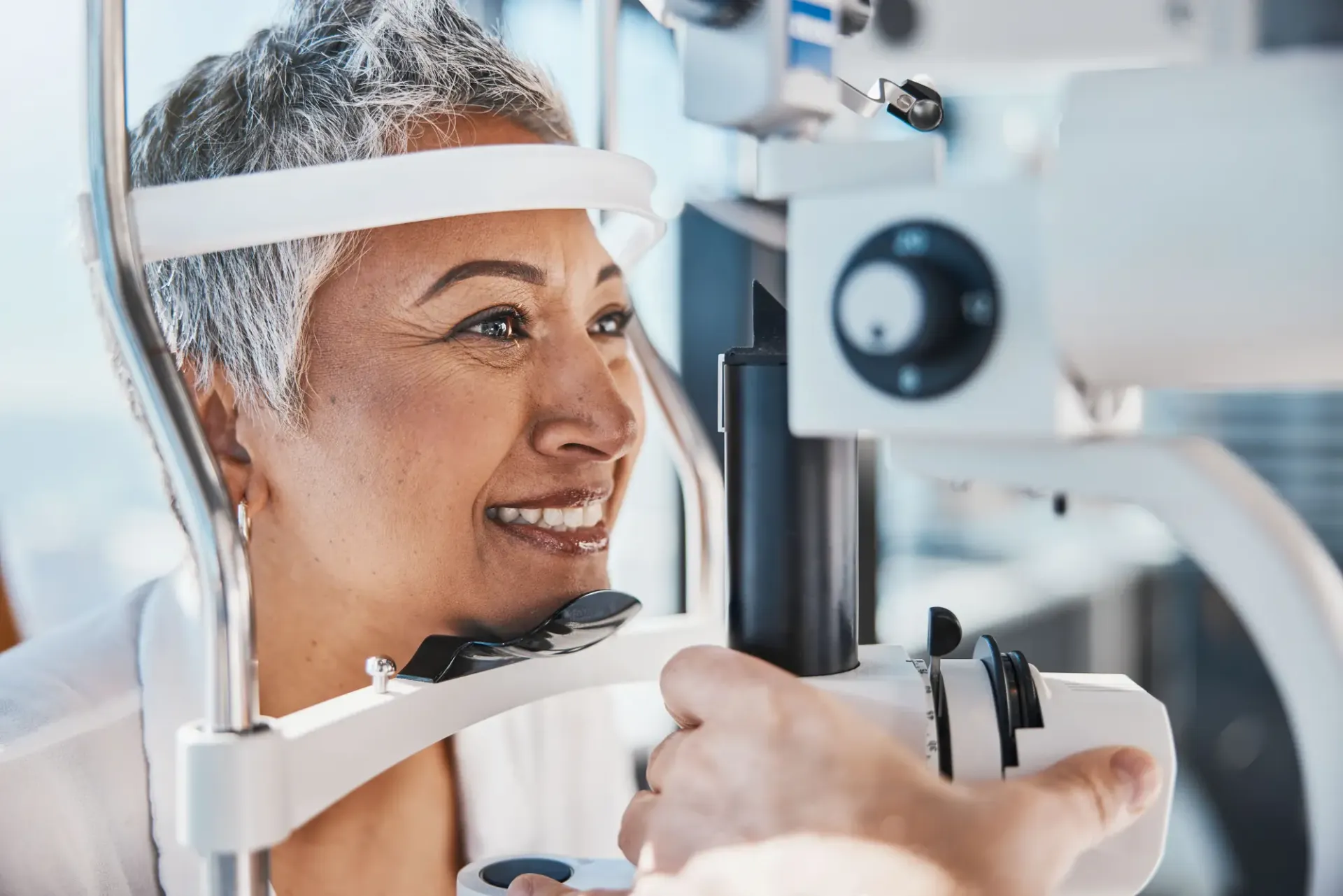
A non-invasive light-based treatment for suitable patients with dry age-related macular degeneration
Farmilo Optometrist — Leicester
Available in-store or at home
